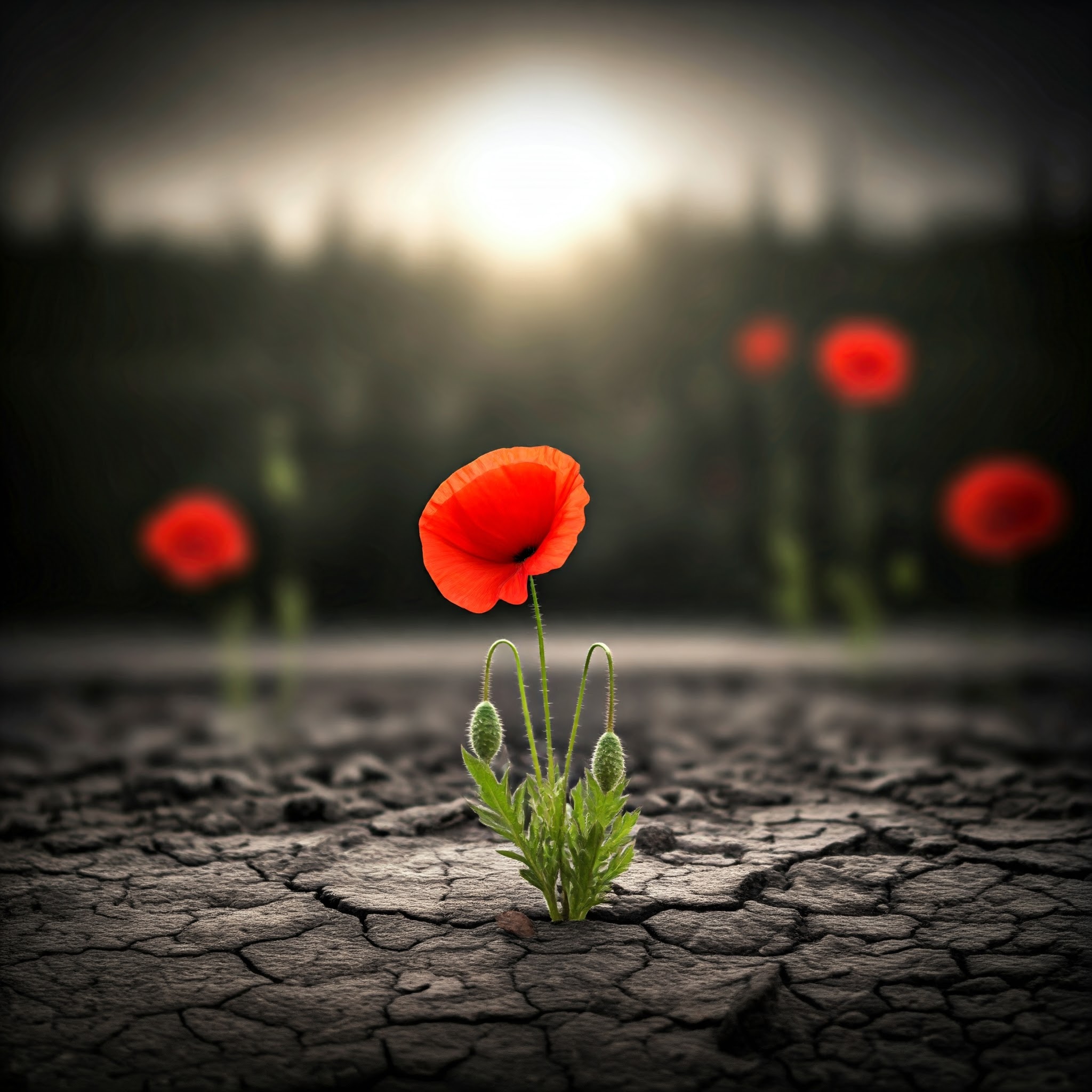
The snow had gathered in the corner of the trenches. The soil was dark and grey, wet and muddy, bloody and restless. It had been a hundred and one days since our soldier was inside those trenches. We do not know his name. We don’t need to know his name, where he is from, where he was, and which war he was fighting. All we need to know is that it was today.
He was sitting inside the trench for his night watch. Thankfully, it was one of the quieter nights. The night was a sequestered one when you could hear yourself breathing in the slow winds of the freezing winds. Our soldier looked at his right and his compatriot had dozed off with a cigarette on his lips.
The soldier was only twenty-eight. He was far away from home, a home where his wife was sleeping on their bed, a home where his friends spent a lazy Sunday with him, a home where his mother taught him to cook her secret recipe, a home which exists some lightyears away from the trenches where he was sitting.
He heard a rustling sound and he looked around. He peered up and pointed his gun towards the dark void ahead of him. There was no one. He kept very still and focused but there was no sound. The enemy was sleeping.
He heard footsteps now and he sprung on his knees. He looked around.
“There is no one boy,”
He looked to his left and staggered back. A man, a decade older to him, was sitting on the opposite wall. He was semi-transparent. You recognized a ghost when you saw one in front of you. He was also a soldier but not from our time.
“Who are you?” asked the soldier, confused. He was neither afraid nor alarmed, neither stupefied nor petrified. He had been seeking spectral voices of his friends for days. But the ghost in front of him was no friend or an enemy.
“I am Fred?”
“Fred?”
“Yeah, Fred. Died in the Battle of Jutland.”
The soldier tilted his head quizzically.
“Common man. The first World War, on the Danish coast. Ring any bell?”
The soldier simply stared at the ghost.
“It does not matter. No one remembers me and no one will remember when you die.”
Fred took a cigarette from his pocket. The cigarette he smoked was a real one. He took his first puff and blew it in the air.
“My wife and my child will remember me,” said the soldier.
Fred smirked. “We all thought they would, every last one of us. That I would go back to my wife and get that comforting embrace. That is the thing about women, they are warm and smell so darn nice, like fresh soap or lavender. Makes a man feel young again, as if the war and all its horrors had never touched you, as if you were born anew. But they don’t. Once the wars are over, all that’s left is the desire to forget. But my lad, you are not going back, just as I did not.”
Fred thought of his wife and her smile whenever he took her hands and kissed them. The air was crisp and Fred assumed that the ghost was his imagination. But he was too tired and withered.
“At least we are fighting for freedom, against oppression, against degenerates,” said the soldier.
Fred took another large puff and blew in the air. “Depends on which side you are on. I met a soldier on the other side. They are all like you. We are like each other. We are the forgotten. They will remember the singer who is touring the world, the movie star who has that million-dollar smile, the politician who is corrupt but oh so funny, but not you. Never you.”
The soldier looked at Fred somberly. Even though he was transparent, he could see the bullet that had once upon a time pierced through his heart. He was a good-looking fellow.
“Why tell me all this?”
“Because I know you’re going to die ten days from now. By then, the world will have fractured even further. Somewhere, the first intelligent robot will take its first step; somewhere, in the midst of war, newborn babies will perish from poisonous gas; somewhere, the rich will throw lavish parties; and somewhere else, a drought will have wiped out an entire village. And the gods we pray to might wonder, too: why did you fight?”
The soldier did not want to hear this. He knew what he believed in. He mattered, the war mattered, his country mattered.
Another soldier beside him coughed loudly, woke up for a few minutes, and then went back to sleep again. Fred and the soldier looked at him.
“Lad, you have ten days to send a message to your son. Make it count.”
The soldier stared at Fred, his mind a whirlwind of defiance, sorrow, and something close to resignation. He wanted to argue, to say that his sacrifice would mean something, that his name would not be one more among the forgotten. But the ghost’s gaze held steady, a sad understanding etched in his translucent face.
Fred took a final drag from his cigarette, the ember glowing faintly in the darkness, then flicked it away. The cigarette vanished before it hit the ground.
“There was a war and there are wars now. I have to meet the rest of the forgotten who would soon join me. You will too join me soon. There is no place for us in heaven or hell. The beyond have washed their hands off.”
The soldier looked down and when he looked up, Fred was gone. He was left only with the soft breaths of his comrades on that bloodstained trench.
Twelfth day from that day, a mother will die as the war would have engulfed the life of the city. She would lay on a bed of rocks, with her bones broken, with soot on her face, with blood on her chest. A young boy would be sitting beside her, holding his mother’s phone with a video playing of his father who would be dead. He would not cry. He would look at the man coming towards him with vacant eyes.
The man would pick up this child, he would hear the words of his father – “Forget me, my dear child. Forget what happened…”
 Itvara
Leave a comment